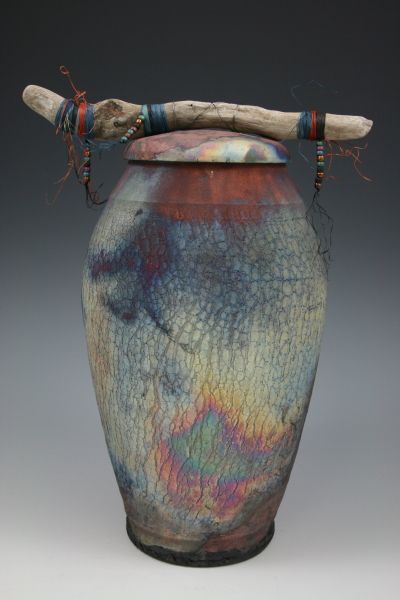
Raku is a method of firing pottery see pictures below.
Raku ceramics definition.
The firing process requires a special raku kiln that is fueled by propane and reaches temperatures of about 1 800 f about 982 c.
Under the encouragement and patronage of his close friend tea master sen no rikyū he crafted a style of bowl which was very much unlike the colorful chinese influenced ceramics of the time.
The appeal was heightened in japan when the ware was created for use in japanese tea ceremonies.
The piece is first bisque fired then it is glazed and undergoes a raku firing process.
The combustible material ignites and the fire and smoke react with the glaze to create very.
Make offer northwest studio pottery raku weed pot vase rose moore 2010 red w leaves signed.
This article will discuss western style raku developed by paul soldner in the 1960s.
It is traditionally characterised by being hand shaped rather than thrown fairly porous vessels which result from low firing temperatures lead glazes and the removal of pieces from the kiln while still glowing hot.
Scott lindberg 10 5 tall ceramic raku studio pottery vase.
Each piece is fired in a kiln until the piece reaches about 1800 f.
Northwest studio pottery raku weed pot vase rose moore 2010 red w leaves signed.
Raku pottery is mainly used for decoration rather than being functional.
True japanese raku refers to pottery made by a specific family in japan for pottery that is specifically made for the japanese tea ceremony.
The piece is removed with tongs while red hot and place in a metal can with a combustible material like paper or sawdust.
Raku pottery was first developed by japanese potters in the 16th century and it still holds a mystique and is embraced by amateur and professional potters till this day.
Each of jeremy diller s raku pottery pieces are fired in an outdoor kiln and left to smolder in a pit with wood shavings.
Raku pottery ceramic art by jeremy diller.
Delving further into raku s history it dates right back to the early 1550s as mentioned specifically for the zen buddhist masters in their ceremonial teaware it s been well documented that this was the favored method of ceramics for the zen buddhist masters as raku ware touches on many of the things that zen philosophy embodies most notably its simplicity and naturalness.
1592 in the 16th century in kyoto.
Man playing a guitar.
Raku is a low fired ceramic ware first produced by sasaki chōjirō d.
Not every one of these one of a kind ceramic art pieces survives their trial by fire.