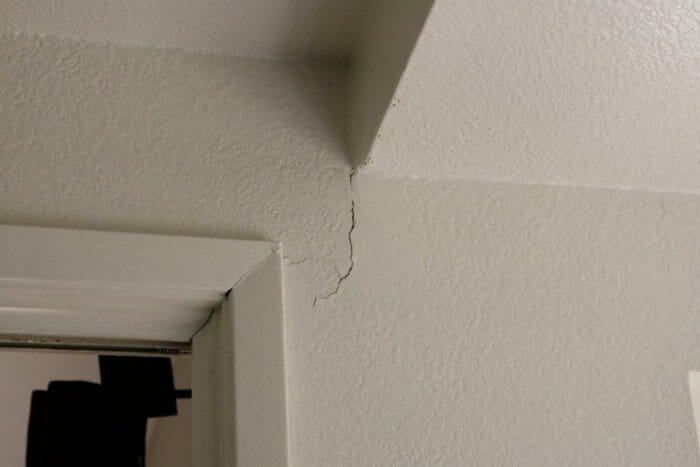
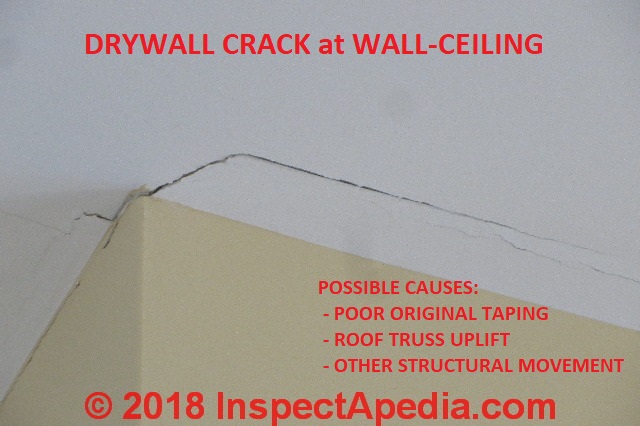
Typically plaster ceiling cracks have two causes.
New house has drywall cracks from bad roof.
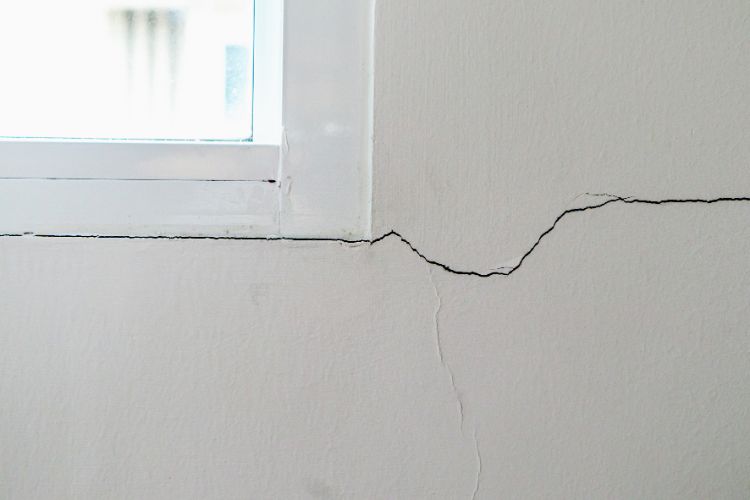
Wide cracks and areas that have a number of cracks.
If you discover a plaster drywall or concrete wall has a serious crack call a structural engineer to evaluate the damage.
For an often lengthy period a house will creak and pop from time to time due solely to its own weight causing the soil beneath the house to compact thus allowing sections or even the entire house to sink slowly and minutely into the ground.
This can cause all kinds of inconsistent shifting and racking.
These cracks usually run either horizontal or vertical at the drywall seams.
But if the cracks get bigger or are gaping then it pays to call in a professional.
This involves scraping away the loose tape and crumbled bits of drywall mud sanding the surface smooth.
Another primary and fairly mundane cause of random noises within a home is settling.
House settling and temperature or moisture fluctuations in an attic which result in the expansion or contraction of framing members.
This article describes the common causes of all types of cracks that appear in drywall or gypsum board or plasterboard walls ceilings in building interiors.
If a house settles and walls move to any great degree no amount of tape or glue will keep it from cracking.
Homes with vaulted ceilings may develop these cracks in the higher areas as well.
How to determine if the cracks in walls are serious.
A vertical crack usually means the gib or drywall has moved a bit and it s usually ok.
Construction adhesive fasteners drywall tape and corner bead all have limited strength.
All this being said the strength of drywall tape is limited.
It s like the drywall is ripped apart.
Drywall cracks in ceilings or walls.
There s no exact method for determining how serious a wall crack is without hiring an expert to examine the wall but you might be able to.
Repairing cracks in walls the best way to repair a crack in drywall is to re tape the joint.
Another common place to see these cracks is where two pieces of drywall come together.
If your home has a cracked wall it is probably nothing to worry about but you should still do a little investigation to ensure whether or not the crack is serious.
This type of crack generally would be considered a red flag depending on width length and location.
Not all drywall cracking is caused by bad installation methods.